FlexFilms’ Asclepius – Certified 90% PCR content BOPET films

In the by several years, FlexFilms has invested strongly in the inquiry and development ready up at its Kentucky found in the Southern United States. Nosotros reported on some of the new films being developed by FlexFilms in our review of PackExpo in Chicago, where nosotros met up with the young president of FlexFilms, Anantshree Chaturvedi. Recently, FlexFilms has come upward with Asclepius – a new series of films based on ninety% post-consumer recycled polyester. These films, which are under patent application, have been certified by Kingfisher. Details of the FlexFilms Asclepius serial are given below. Meanwhile, we report on Naresh Khanna'south telephonic interview in which he resumed the conversation with Chaturvedi.
Naresh Khanna, editor of Packaging S Asia (future NK) – Anantshree, when we met at PackExpo and talked about 'green' films, you said that the market place was non set for them in some respects and even the brand owners seemed reluctant to change over to new materials. Has the situation inverse now?
Anantshree Chaturvedi, president FlexFilms International (time to come Air conditioning) – The market has moved so chop-chop over the past six months that the world is a totally dissimilar place today. Consumer trends have changed so much over the past few months. There are a whole bunch of immature brands, new people who are inbound the nutrient, health and health space. Whether it is Ayurvedic or energy brands, these entrepreneurs have strong social media branding and a robust consumer base. They come dorsum to us and really say that they can move 30% more than of their new products just they demand sustainable packaging. Even generic brands such as Costco and Kroger have started using PCR-based materials for their packaging.
These brands and their packaging converters are quite aggressive about trials with the new 90% PCR films and they are aggressive near getting approvals. A great deal of the button has really come from the characterization industry, particularly from UPM with its counterbalanced arroyo to producing labelstock from recycled PET materials.
Our Asclepius is the only ninety% PCR film that is Kingfisher certified. Nosotros have been able to close the supply concatenation loop with perfect synergy in a perfect circle of recycling polyesters from the bottom grade to the tiptop. More than xc% of the fourth dimension we get a perfect grade of certification, the triangle with the 1 in the center. In early 2019, AIMCAL as well recognized the movie with the 'Excellence in Sustainability' award due to the technology and cost these films offer to the market.
NK – In October, you mentioned downstream challenges to changing over to greener films. What are the downstream challenges to using the Asclepius PCR films?
AC – First of all, you lot have to practise nonetheless value-adds as on any other film. We accept made the adjustments. The reason why our PCR flick is then successful is that we are able to use the inherently superior thermal backdrop of polyester and thus far take establish the optimum level of PCR that we can utilise is 90%.
The challenges have been met as far as optimizing the runnability and sealing – these have been completely matched with polyester. This means that it runs at the same speed as any of the films that are normally used in similar applications.
NK – Is in that location a price premium for Asclepius?
AC: On the pricing it does control a scrap of a premium but with volumes it will be pretty much the same. I had to accept an economic call, where if I had a price that was higher I could non sell the volumes that I demand to industry the film. The overall volume we have started getting is merely 20%. Only it must be kept in heed that 20% from aught in just a few months is a phenomenal ascent.

NK – How do yous acquire the production waste and what is the drove workflow?
AC: This is one of the most interesting parts of the whole challenge. Initially, when we started off, we thought nosotros could get it from the recyclers, the marketplace, local recycling bodies, various government bodies of which there are many in the adult world. Nosotros have given the polyester waste material an economic value. Information technology was a claiming before but information technology has become easier; especially polyester waste which will grow in value with time.
In some cases we accept meet useful suppliers of polyester waste. For example, even though we don't have a plant in the United kingdom of great britain and northern ireland, nosotros have a very good setup there to get waste that nosotros can transport to our motion-picture show plant in Poland for recycling.
We are trying to prepare the waste product collection and are in the process of collecting, sorting and recycling it in all our plants. Europe is far ahead in recycling and optimizing since the sorting is done by the consumers themselves. While the US is far behind, there is plenty polyester waste drove.
Although collecting and sorting waste material is a big business in America, getting high quality waste is a challenge and we have to do the sub-sorting ourselves. We are working on automating this and with the right volumes it will become feasible.
NK – What are your initial markets?
AC: The whole matter was adult and optimized in Kentucky. The American R&D of Uflex has delivered. All of the initial work, the R&D was done in the United states.
However, while the commencement Asclepius films were produced in our Poland establish, the existent initial markets for this production are in the NAFTA region. We are producing it in Kentucky. This is the first large matter coming out of our investment in the inquiry and evolution in the The states. Asclepius is designed in Kentucky and made all over the world.
-
Designed in Kentucky for production all over the earth
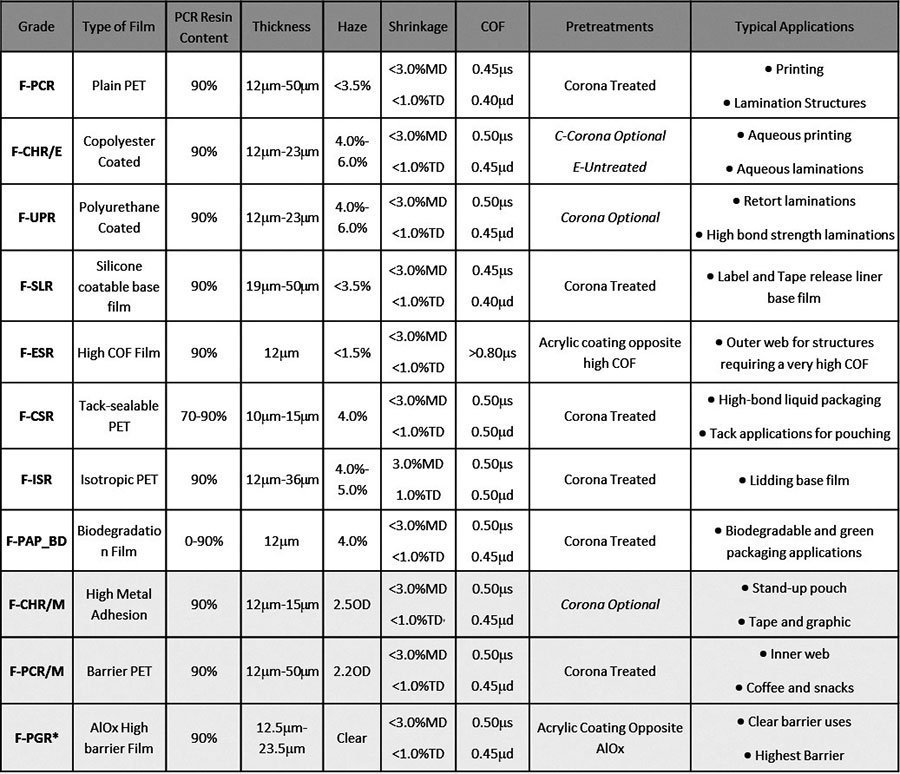
Asclepius – A Range of ninety% PCR BOPET Films
Packaging is increasingly appreciated as a primal asset for brands to display and communicate their sustainability credentials to their consumers. Since packaging is inalienable to the overall product experience, information technology finds a special place in the sustainability narrative.
Uflex Group has been a trendsetter when it comes to sustainable innovation, and its global film manufacturing arm FlexFilms has developed a PCR grade motion-picture show containing minimum 90% post-consumer recycled PET content. These films were brought to the market in tardily 2017, as a airplane pilot project with its debut film F-PCR. Amongst encouraging feedback from the industry, FlexFilms has expanded its portfolio and is now offering an entire bouquet of 90% PCR grade films with enhanced sustainability and low carbon footprint for its customers, under the make proper noun Asclepius.
FlexFilm's Asclepius patent awaiting moving-picture show technology is a family of plain, treated, coated, loftier bulwark and heat-sealable BOPET films based on ninety% PCR polymer content. This film represents a 75% reduction in carbon footprint versus virgin BOPET grades. Customers have started to employ these films in a range of packaging and labelling applications in gild to help attain high sustainability goals every bit defined by various 3rd parties, and frequently requested by large global CPGs.
While lower levels of PCR content accept been available in BOPET films, Flex's technology pioneered an extremely high level of PCR content every bit is needed with the accelerating greening demand of the global economy. This is the only 90% PCR BOPET film that has received the prestigious 'Kingfisher' certification from SCS Global Services that certifies that FlexFilms' PCR grade films contain minimum ninety% postal service-consumer recycled PET content. This certification corroborates to its customers and to the flexible films marketplace, the integrity of its supply chain and claims regarding PCR-based moving-picture show technology. In early 2019, AIMCAL recognized the movie with 'Excellence in Sustainability' due to the engineering and cost these films offer to the market.
Consumer brands that embrace high PCR content film early will be able to build a more resilient and closed-loop organization than ever. Price-effective innovation in the dark-green space is what is absolutely necessary to drive acceptance globally and the recyclable Asclepius films from FlexFilms delivers on that promise of achieving sustainability goals faster for the consumer products industry. Asclepius films have a significantly lower net energy requirement for production when compared to virgin films, which is established by its Life Bike Assay.

Asclepius' new range of low carbon footprint grades is available in virtually common converter grades for construction of low carbon footprint consummate packaging constructions. Print webs, metalized webs and sealable webs are available to be processed into a total package. The Asclepius range of films can be used for a host of applications like aqueous lamination, lidding base motion picture, java and snacks packaging, and high-bail liquid packaging.
loweryexactionan1944.blogspot.com
Source: https://packagingsouthasia.com/packaging-production/flexfilms-asclepius-certified-90-pcr-content-bopet-films/

Post a Comment for "FlexFilms’ Asclepius – Certified 90% PCR content BOPET films"