Brussels Sprouts Care - How To Grow And Harvest Brussels Sprouts
Truly an aboriginal cultivar, Brussels sprouts was the vegetable that put the Belgian upper-case letter on the map. A close relative of cabbage, it's the kind of vegetable you can use in unlike recipes and salads and fifty-fifty freeze it to keep it fresh. The diminutive cabbage is a specialty of Brussels, Kingdom of belgium. But its health benefits supersede those of its larger cousin, the cabbage.
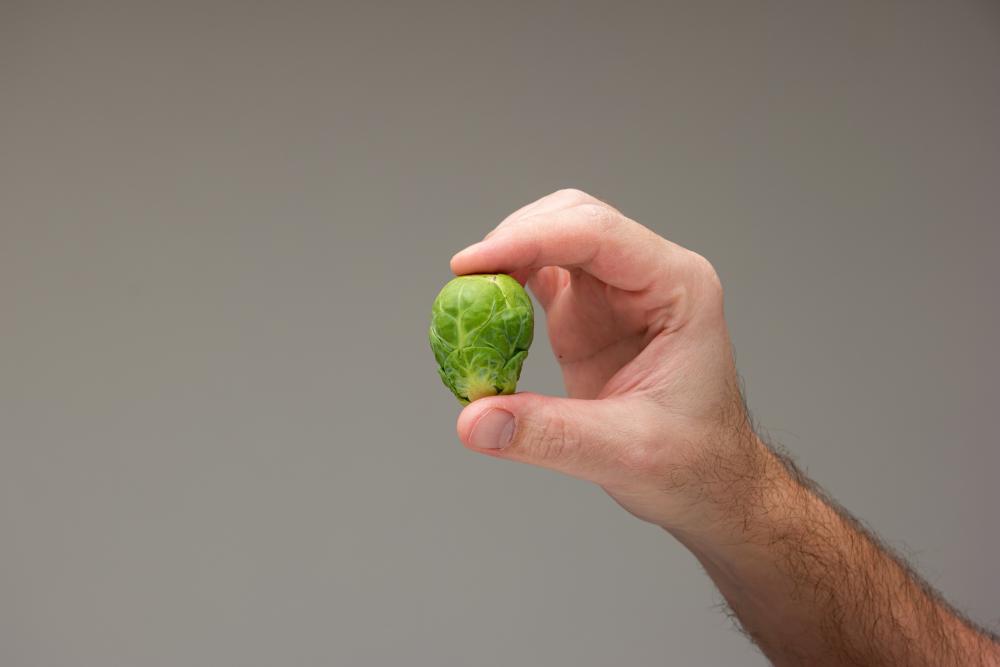
For one matter, information technology is packed with nutrients and antioxidants. In addition, it has loftier cobweb and vitamin Grand content which helps with digestion, reduces inflammation, and might ameliorate your allowed arrangement. You tin saute, roast, or cook these veggies any way you like.
Additionally, Brussels sprouts are meliorate consumed fresh. That'due south when you get near of the flavor and nutritional values. As a gardener, you know that the all-time way to swallow a veggie fresh is to grow it in your garden. This article walks you through planting Brussels sprouts, caring for them, and finally harvesting them. Information technology also discusses the different varieties you can grow at home.
Brussels Sprouts At a Glance
While the good people of Brussels, Belgium, were non the only ones growing Brussels sprouts (Brassica oleracea), they specialized in this dwarfish cabbage and went to great lengths growing and cooking information technology. So much so, the veggie became associated with that ancient European city.
Growing Brussels sprouts is not different from growing cabbage. In fact, in the early stages of the vegetable'south life, it resembles cabbage in almost every way. Still, pocket-sized buds grow along the stem in one case the primary stalk reaches its full summit of 3 anxiety. These buds will turn into small heads which you volition need to harvest while they're young and tender.
The sprouts are usually green, although some cultivars take red-laced leaves. On average the head of the veggie measures about 1.6 inches in bore. It grows in zones 2 to 9. In the common cold zones, you can only grow it as an almanac. Merely those living in mild zones can keep the veggie going for a second twelvemonth.
In its second twelvemonth, information technology will develop yellowish flowers in the bound. Once pollinated, fruits containing seeds develop inside of the female flower and you can utilize the seeds to kickoff a new patch of Brussels sprouts.
Brussels Sprouts Varieties
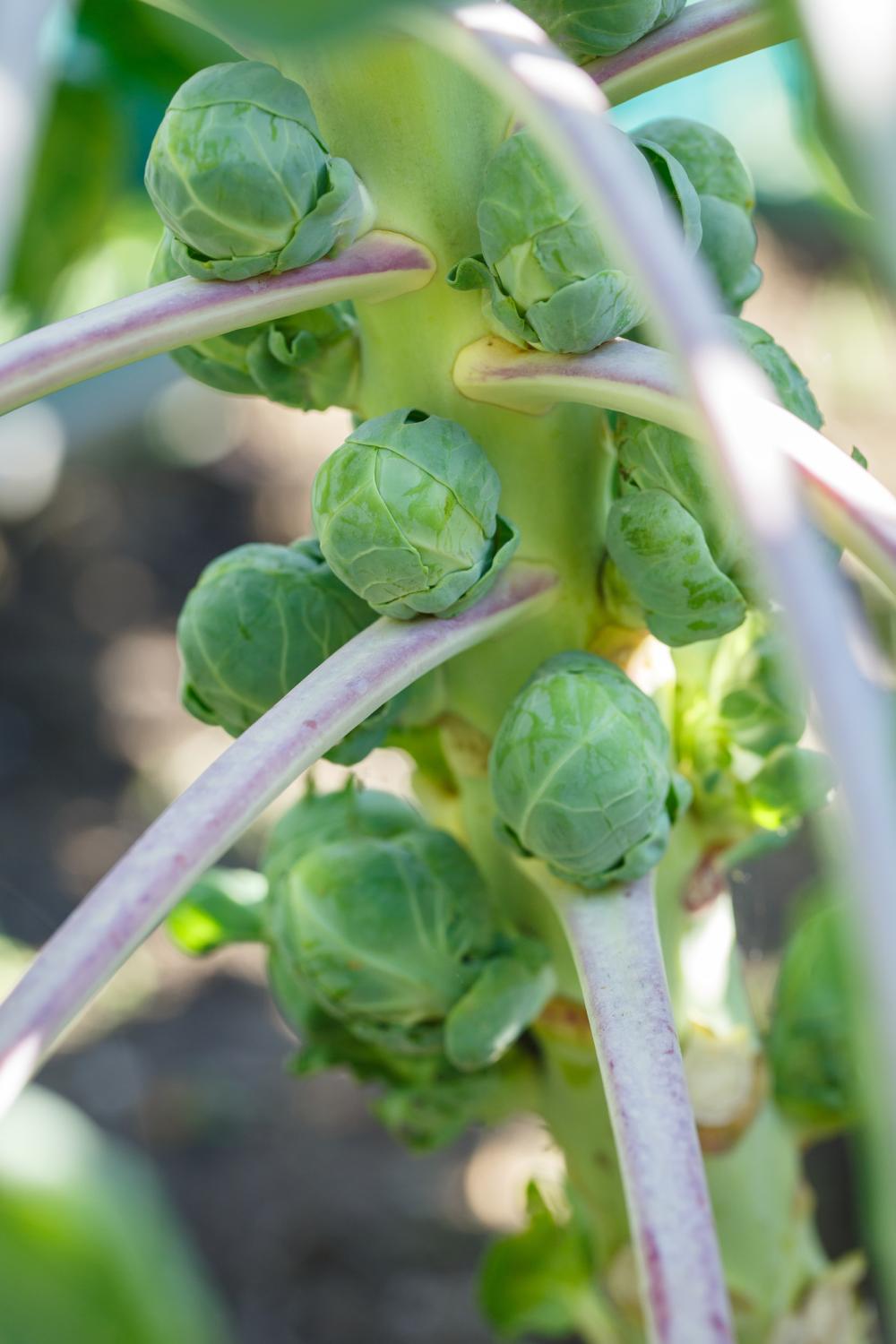
The first Brussels sprouts were grown around the year 1200. Since and then, many cultivars have sprung up everywhere. Some have more tolerance to warm temperatures while others have a buttery taste as compared to the earthy sense of taste of near varieties. Here are some varieties to consider.
- Catskill: A contempo cultivar that originates from New York. The principal claim to fame of this cultivar is its ii-inch heads and big stalk. Each establish yields about 10 buds and it takes nearly 110 days to mature. The texture of the heads is crisp and they take a proficient flavor when sauteed or roasted.
- Churchill: The cultivar matures in simply xc days, giving you an advantage if you live in a warm zone. It is famous for its loftier yield although information technology needs more space than other varieties due to the dumbo lateral growths. It's as well more prone to fungal infection due to poor air ventilation than more slender cultivars.
- Redarling: A unique cultivar with majestic leaves and a pleasant and mild taste. It takes about 140 days to mature and the plant grows to about 31.5 inches on average. The buds are about 1.2 inches each and the cultivar has a high yield.
- Capitola: The buds have a medium green color and need about 135 days to mature. Each bud is 1.half dozen inches in diameter and the plant grows to only 38.5 inches high. The colour and texture of the buds are quite appealing and you tin swallow it fresh or cook it.
- Cryptus: A high-yielding cultivar that is also resistant to diseases especially clubroot. The buds are small averaging a little over 1 inch in diameter and have a medium green color. The but drawback is that it needs about 185 days in the garden to mature which means it's not suitable for moderate zones.
- Gladius: Another small cultivar with blue-light-green buds. It needs only 140 days in the soil and the establish averages 31.v inches in meridian. Besides its unique leafage color, this hybrid is known for its disease resistance.
How to Abound Brussels Sprouts
I of the primary concerns about growing Brussels sprouts is their low tolerance to high temperatures. Once the temperature goes above 70 degrees F, the veggie will struggle noticeably and might bolt. So you need to time your planting of the veggie and so that it's ready to harvest in mild weather.
In warm zones, you could outset it indoors about 12 weeks before the first frost. That mode you volition harvest your buds right after the frost. Hither's how to start Brussels sprouts in piece of cake steps.
- Get your seeds from a reliable source and choose a affliction-resistant cultivar.
- Cull a sunny spot in your garden and break the soil. Turn up 12 inches of the soil and mix in half dozen inches of aged manure. Let the soil rest in the dominicus for a week or ii.
- Sow the seeds well-nigh a quarter-inch deep into the soil and space them out keeping well-nigh 4 inches between the seeds. Y'all'll thin them out later.
- Cover the seeds with a thin layer of soil. Don't pack the soil since the seeds need lite to germinate.
- Water the seeds immediately to get the soil moist. Keep it moist equally long as the seeds have not germinated yet.
- When the seedlings are about iv inches high, thin them out. After you're washed, the seedlings would be nigh 36 inches apart.
- For a good ingather, grow 2 plants for every person in the firm.
Brussels Sprouts Care
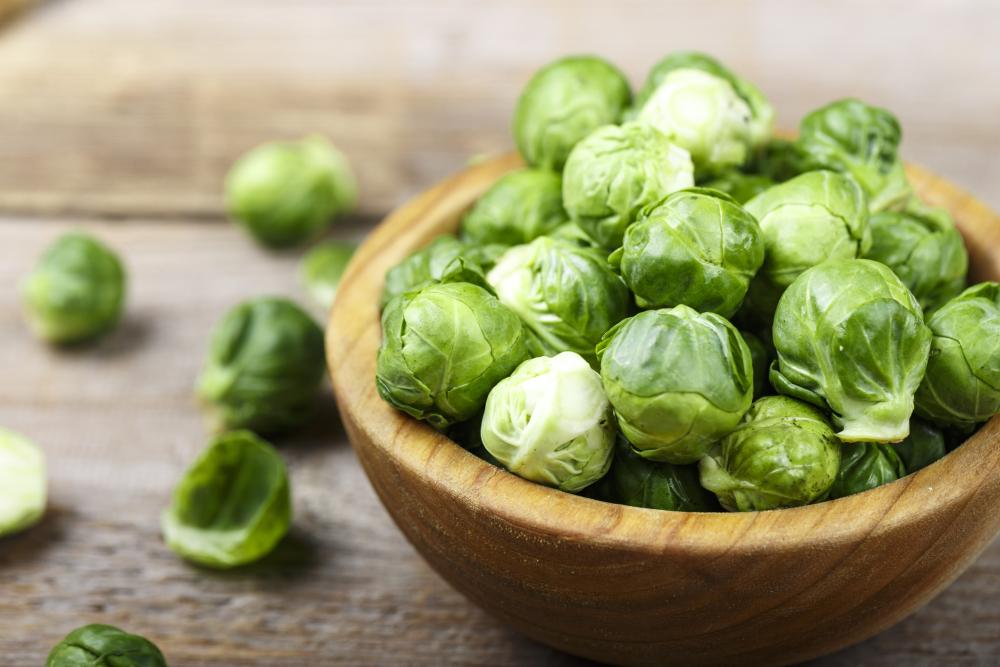
If y'all time your Brussels sprouts so that the mature buds avoid high temperatures, y'all volition savour a good and salubrious harvest. Just to get there, there's a little chip of gardening work that needs to be done. From the usual watering and feeding to fighting off pests and diseases, Brussels sprouts need an attentive gardener.
Soil
Fertile soil is 1 of the keys to a successful and bountiful Brussels sprouts crop. But what's more interesting is that this veggie prefers heavy soil over sandy or loamy soil. In other words, if yous have clayish soil in your garden, y'all won't demand to better it. Crop rotation is important to avert diseases such equally clubroot and allow the soil to furnish the depleted nutrients over time.
As for the soil pH, it should exist between 6.0 to six.8. If an earlier crop was infected with clubroot in this same surface area, increment the soil pH to 7.0 by calculation lime. This prevents the pathogens in the soil from spreading and infecting the plants.
Water
When watering Brussels sprouts, your goal is to keep the soil evenly moist and get the water to the roots as quickly every bit possible earlier it evaporates. This is hands achieved past aiming the water can nozzle toward the base of the plants. And since the soil is heavy, information technology will retain moisture for long periods of time compared to sandy soil.
Provide the sprouts with one inch of h2o every week including rainfall. If the soil dries out fast due to loftier temperature or glaring sunday, cover the beds with a three-inch thick layer of mulch. You can use any organic mulch bachelor at abode from fallen leaves to pine needles, oak bawl, or straw.
And in cases of hot weather where the temperature stays in a higher place 70 degrees F for a few days, consider providing the veggies with shade. As the buds arroyo maturity, cut dorsum on watering to about half of the regular amount.
Fertilizer
As a heavy feeder, Brussels sprouts need rich soil with plenty of organic materials. This is why you shouldn't establish the veggie in the aforementioned spot two years in a row. Before yous establish the seeds or seedlings, mix in about 6 inches of aged manure or organic compost into the soil. And about half-dozen weeks in, you'll demand to apply a well-counterbalanced x-x-10 fertilizer.
If yous abound the veggie in sandy soil, you lot'll need to use a nitrogen-rich fertilizer. Boron deficiency is some other cause for business organisation and one of its main symptoms is hollow stems. Feed the plant with borax (one tablespoon dissolved in 1.v gallons of water). One application is usually enough.
Pests and Diseases
Fending off the numerous pests that attack Brussels sprouts tin be a full-time job. Aphids are the get-go to brand their presence known with the tiny holes they make in the leaves. Use a garden hose to boom them off the plants. If that doesn't work, rub the leaves and stems with a swab soaked in rubbing alcohol.
Next in line are cabbage worms and cabbage loopers. They are not as tiny as aphids and y'all tin can easily pick them by paw and destroy them. A bucket full of h2o with two tablespoons of detergent is a merciful way to kill them.
Equally for cutworms, the best way is to prevent them from reaching the plants. Install cutworm collars around the seedlings.
Diseases are also numerous. Cabbage yellows is a fungal infection that starts with the lower leaves and then spreads upward. As the leaves plow yellowish, the stem wilts and turns brown then rots. Fight it off with compost tea that helps suppress the fungus.
Clubroot is another devastating disease that damages the whole ingather and stays in the soil for years. Increment the pH levels in the soil to 7.0 to control the spread of this fungus.
Harvesting Brussels Sprouts
When information technology comes to harvesting Brussels sprouts, timing is everything. The pocket-size buds are ordinarily tastier and more tender than the larger ones. So even if your cultivar grows buds as big as ii inches in bore, it'due south better to harvest them when they are about 1.1 or 1.2 inches across.
One proficient clue that the buds are ripe is when the leaves nearby turn xanthous. Usually, the ripening starts from the base and works its way up to the buds near the elevation of the stem. That means each plant could take a few weeks to harvest all the buds.
Before you harvest the buds, you'll demand to remove the yellow leaves in a higher place each bud a few days in advance. This removes the clutter around the buds and allows them to gain their distinct round shape. And if you want to encourage all the buds on a stalk to ripen together, compression the head of the stalk about 4 weeks before harvest fourth dimension.
Storing Brussels Sprouts
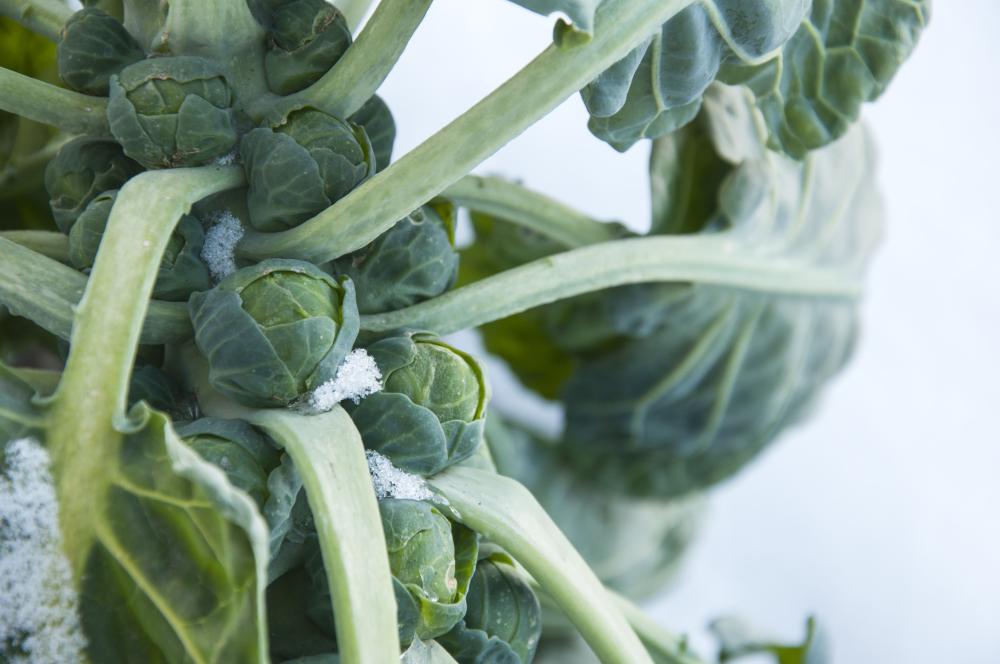
As with many other veggies and fruits, Brussels sprouts should be consumed fresh. That'southward when you get the virtually flavors and nutrients out of it. Luckily, since the veggie has a large harvest window, yous can collect as many buds as you need every day and eat them fresh.
If you want to store the buds, don't wash them since the humidity could spoil them. Instead, go along them in a aught-lock handbag and seal it then place it in the refrigerator. They will stay well-baked and delicious for up to 5 days. When you take them out, yous can wash them.
If y'all want to store Brussels sprouts for more than 5 days, and then you'll need to melt them right after harvesting. Cooked sprouts can stay in the fridge for far longer than raw buds. My favorite fashion to cook them is to roast the fresh buds with bacon and shallots. But of form, you lot tin melt them equally soup. And when cooked with sun-dried tomatoes, that brings out the deepest and richest flavors of Brussels sprouts.
loweryexactionan1944.blogspot.com
Source: https://www.diys.com/brussels-sprouts-care/

Post a Comment for "Brussels Sprouts Care - How To Grow And Harvest Brussels Sprouts"